
Your commercial flooring project needs durability guarantees and long-term performance data. AC4 laminate flooring specs aren’t just technical details. They’re risk management tools.
Most B2B buyers still judge these products by residential standards. This means missing key performance factors. These factors separate profitable installs from expensive callbacks.
AC4 offers 4,000+ revolution abrasion resistance. Lower grades can’t match this. The difference isn’t just numbers on paper. It’s the gap between a 10-year warranty you can pass to clients and a 3-year liability that cuts into your margins.
AC4 Laminate Flooring: Core Technical Standards and Performance Metrics
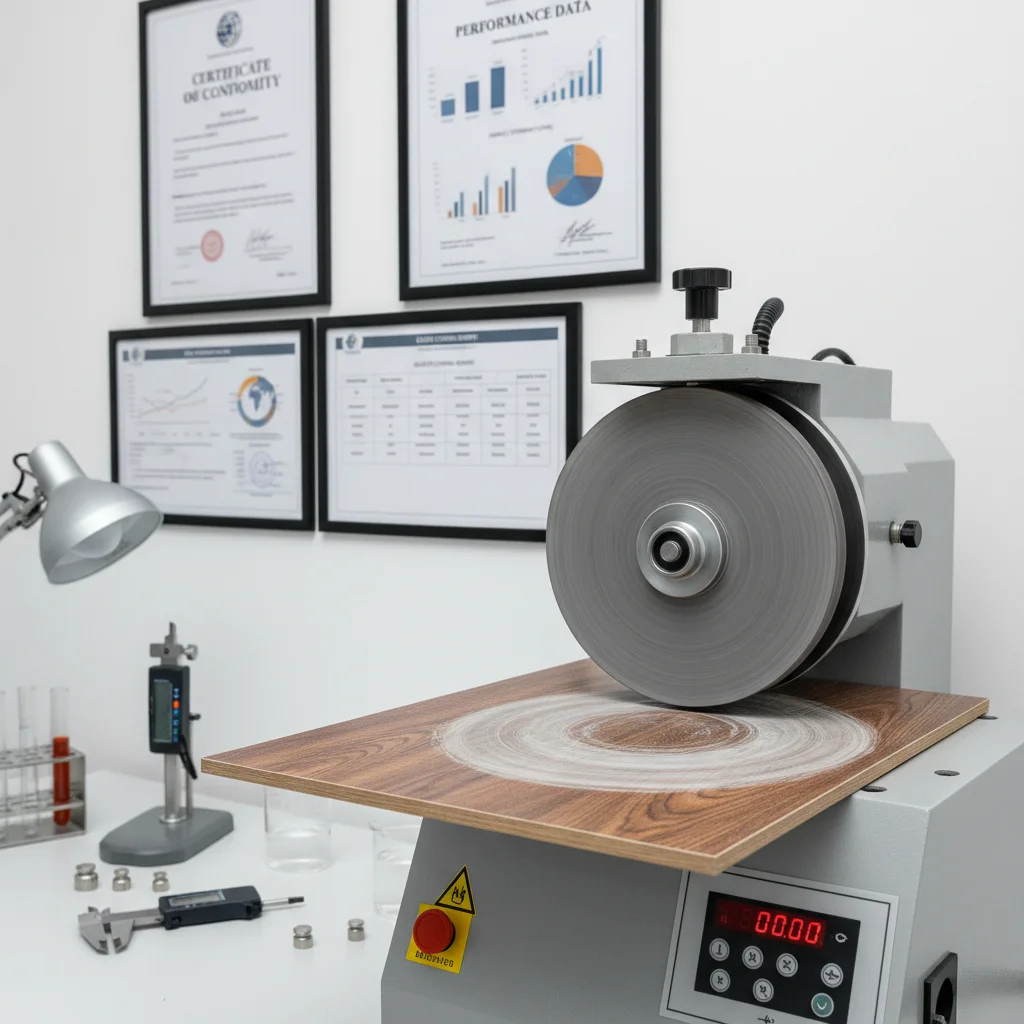
The EN 13329 standard sets AC4 as a precise performance threshold. It’s not a marketing label. Your supplier’s claims don’t matter without third-party test certificates. These must prove >4000 Taber abrasion cycles. This number separates two types of products. Some survive moderate commercial traffic. Others show wear patterns within 18 months.
AC4 classification equals ICE 32 rating in international standards. You need this dual certification for two reasons. First, you’re sourcing from European manufacturers. Second, you’re meeting multinational project specs. The abrasion resistance benchmark uses those 4000+ revolutions. It measures how many times a rotating disc can grind the surface. Visual damage appears at the breaking point. Your flooring either passes this test or doesn’t. No partial credit exists.
HDF Core Density: The Hidden Performance Driver
Core density determines real-world durability. Surface specs alone don’t tell the full story. Standard AC4 products use HDF (High-Density Fiberboard) at minimum 1200 kg/m³. Some suppliers offer “budget AC4” at 900-1000 kg/m³. They’re gaming the system. Lower density creates three problems:
-
Reduced impact resistance below the 2000-pound Janka hardness threshold
-
Faster moisture penetration at seams and edges
-
Shorter lock system lifespan under expansion/contraction cycles
Premium AC4 panels reach 1400 kg/m³. This 15-20% density increase delivers clear gains. You get better scratch resistance (>3.5 N per EN 438-7). Plus, micro-scratch performance improves (Level 3 certification per EN 16094). Ask suppliers for density test reports. They should use TS EN 323 methodology. Vague “high-density” claims don’t count as procurement-grade documentation.
Critical Mechanical Properties You Must Verify
|
Test Parameter |
Standard Method |
AC4 Minimum |
Procurement Checkpoint |
|---|---|---|---|
|
Surface Soundness |
TS EN 13329 |
≥1.25 N/mm² |
Predicts delamination risk under rolling loads |
|
Thickness Tolerance |
TS EN 13329 |
Avg <0.50 mm; max ≤0.15 mm |
Affects installation speed and subfloor prep costs |
|
MOR (Modulus of Rupture) |
Industry Standard |
12,000 psi |
Determines breaking point under weight stress |
|
MOE (Modulus of Elasticity) |
Industry Standard |
800-1000 psi |
Measures flex recovery after impact |
Surface soundness below 1.25 N/mm² signals a problem. Weak bonding exists between wear layer and HDF Core. Visual inspection won’t catch this defect. It shows up as bubbling or peeling after 6-12 months under foot traffic. Request batch-specific test data. Generic product certificates aren’t enough.
Thickness Options: Strategic Selection for Project Needs
AC4 laminate ships in 7 mm, 8 mm, 10 mm, and 12 mm profiles. Thicker doesn’t mean better for your project economics:
-
7-8 mm: Lowest installed cost; works for budget office fits with <500 foot traffic per day
-
10 mm: Standard commercial spec; balances acoustic performance with material costs
-
12 mm: Premium stability; needed for underfloor heating installations or uneven subfloors
Thicker planks reduce sound transmission by 15-20% compared to 7 mm options. This matters in buildings with multiple tenants. Noise complaints trigger expensive fixes. The acoustic upgrade costs €2-4/m². But it stops potential €15,000+ soundproofing retrofits.
Performance Ratings vs. Commercial Reality
AC4’s >4000 abrasion cycles put it in the middle. It sits between residential-grade AC3 (lower durability) and commercial-grade AC5 (>6500 cycles). For B2B projects:
-
Moderate Commercial Zones: Boutique retail, shared offices, hotel corridors (200-500 traffic per day)
-
Heavy Residential: Apartment lobbies, common areas, high-turnover rentals
-
Hybrid Spaces: Co-working lounges, medical office waiting rooms, showrooms
AC4 fails in heavy commercial spaces (>1000 traffic per day). Suppliers push it for restaurant dining areas or retail main aisles. They’re setting you up for early replacement. The 20-year residential warranty drops to 5 years commercial coverage. This gap shows you the expected service life under real stress.
Scratch resistance testing (EN 438-7) requires >3.5 N force to create visible marks. Quality AC4 products exceed this by 10-15%. Cheaper options meet the minimum. This difference appears as surface scuffing around desk chairs and equipment casters within the first year.
Advanced Performance Features Worth Specifying
Modern AC4 laminate includes treatments beyond base AC ratings:
-
Waterproof core technology: Wax-sealed or composite cores resist moisture at joints (critical for entryways and light commercial kitchens)
-
Antistatic properties: Prevents static buildup in server rooms and electronics work areas
-
Flame retardant certification: Required for public buildings in most EU markets
-
Antibacterial surface treatments: Adds 15-20% to material costs but required for healthcare projects
Each upgrade affects your cost structure. Waterproofing adds €3-5/m². Antibacterial certification costs another €2-3/m². Budget these items on their own. Don’t accept generic “enhanced AC4” pricing. It hides where value lies.
Request EN test certificates for each claimed feature. “Moisture resistant” without supporting TS EN documentation is just marketing language. It’s not a contractual specification you can enforce.
AC4 Rating Flooring: Project Fit Analysis

AC4 laminate works for specific project types. Some projects? It fails fast. The 6,500+ rotation abrasion threshold gives you 20 years in heavy residential use. Commercial spaces are different. The timeline shrinks based on foot count and load patterns.
Heavy Residential Applications: Where AC4 Excels
Multi-generation households destroy AC3-rated products in 5-7 years. AC4 handles these spaces without early wear:
-
High-activity kitchens: You get constant foot traffic, dropped utensils, chair scraping. AC4’s impact resistance (steel ball drop tests per EN 13329) stops the divot damage that ruins lower grades.
-
Entrance hallways and mudrooms: Grit from outdoors acts like sandpaper. The 4,000+ revolution rating keeps surface integrity strong through regular abuse.
-
Living rooms with pets: Large dogs create wear patterns around doors and feeding areas. AC4’s scratch resistance (>3.5 N force threshold) keeps visible damage low.
Water-resistant AC4 variants expand where you can install. Wax-sealed cores resist moisture at plank edges for 24-48 hours. This handles kitchen spills or mudroom wetness. It doesn’t replace waterproof vinyl in bathrooms or below-grade basements. Suppliers who say otherwise set you up for mold problems.
Moderate Commercial Sweet Spot
A 12,000 m² office renovation used AC4 throughout corridors and work zones. After 5 years of use, surface abrasion stayed acceptable. This proves AC4 works commercially—under specific conditions:
Proven commercial uses:
– Small offices (20-50 employees): 200-400 foot traffic per day
– Boutique retail: Steady but not heavy customer flow
– Hotel guest rooms: Moderate use between deep cleanings
– Café seating areas: Rolling chairs and table movement
– Salon workstations: Standing traffic without wheeled equipment
Foot traffic matters more than square footage. A 500 m² boutique with 150 visitors per day stresses flooring less than a 200 m² fast-food outlet with 800+ customers. Count bodies, not floor area.
Critical Failure Points to Avoid
AC4 breaks down in three commercial scenarios:
Heavy commercial zones (>1,000 traffic per day): Airports, shopping mall corridors, hospital emergency departments. These need AC5 minimum. AC4 here means replacement in 18-24 months. Your 5-year commercial warranty means nothing once heavy wear shows up in Year 2.
High-impact industrial settings: Warehouses, manufacturing floors, loading docks. Dropped tools and wheeled pallet jacks exceed AC4’s impact rating. Surface damage starts in months.
Heavy moisture exposure: Commercial kitchens, laundromats, pool changing rooms. Even water-resistant AC4 fails under constant wetness. Joint swelling and core damage appear in 6-12 months.
Traffic Rating Decision Framework
|
Foot Count Per Day |
Suitable AC Rating |
Typical Project Type |
Expected Lifespan |
|---|---|---|---|
|
<200 |
AC3 |
Residential bedrooms, home offices |
15-20 years |
|
200-500 |
AC4 |
Busy homes, small offices, boutiques |
10-15 years commercial; 20+ residential |
|
500-1,000 |
AC4 (upper limit) |
Medium retail, hotel lobbies |
7-10 years (warranty gap risk) |
|
>1,000 |
AC5 required |
Shopping centers, public buildings |
AC4 fails in 2-3 years |
The 500-1,000 traffic range creates risk. AC4 qualifies but reaches performance limits. Warranty drops from 15 years residential to 5 years commercial. Traffic exceeding projections by 20% means you replace flooring earlier than clients expect.
Cost-Benefit Reality Check
AC4 costs 15-25% less than AC5 per square meter. For a 1,000 m² project:
– AC4 material cost: €15,000-20,000
– AC5 material cost: €18,000-25,000
– Savings: €3,000-5,000
Those savings vanish with early replacement. AC5 lasts 15 years. AC4 needs replacement at Year 8. You spend the difference twice—plus installation labor at €8-12/m².
Strategic AC4 selection criteria:
– Verify foot traffic stays below 500 per day
– Confirm no heavy wheeled equipment or industrial loads
– Ensure moisture exposure stays in the “incidental spill” range
– Secure commercial warranty terms matching expected service life
– Calculate replacement costs if traffic projections run high
AC4 gives you great value once project conditions match its performance range.
AC4 Laminate Flooring Cost vs Performance ROI Model
Material costs tell one story. But your real financial outcome? That depends on the performance-to-price relationship over the project’s life. AC4 laminate costs $3.50–$5.00 per square foot for premium specs. Thicker panels (10-12mm) range from $0.69 to $5.99+. Core density and surface treatments drive the price.
Total installed costs mix material and labor: $3.00–$10.00 per square foot for most commercial projects. National averages for 1,000 square foot installations run $4,500–$15,000+. Labor alone takes $1.50–$8.00 per square foot. Most projects land around $2,011 total.
Building Your ROI Calculation Framework
Start with project area times material cost ($3.50–$5.00) plus labor ($1.50–$8.00). A 1,000 square foot office renovation hits $5,000 total. AC4 lasts 20 years in homes. That works out to $250 per year.
Compare this to other options: vinyl flooring costs $4–$12 per square foot installed. Hardwood jumps to $6–$14. Tile reaches $7–$15+. AC4 costs less than all premium choices. Plus, you get commercial-grade strength against wear.
Traffic-Based ROI Breakpoints
Projects under 500 foot traffic per day see 20-30% cost savings with AC4 over AC5. The strength difference? Minimal. Your maintenance costs stay low—just basic sweeping and damp mopping. No special cleaning contracts required.
AC4 gives you maximum ROI here:
– Apartment complexes: Lower material costs across 50+ units add up fast
– Small retail chains: Steady moderate traffic fits AC4’s limits perfectly
– Office tenant improvements: Budget room without looking cheap
Premium 12mm AC4 panels boost sound control. Sound transmission drops 15-20% versus 7mm options. This upgrade adds $2–4 per square foot. But it saves you from costly soundproofing fixes that hit $15,000+ per building.
Figure annual cost by dividing total spend by expected life. Factor in your specific traffic. Check that foot count stays below AC4’s 500-per-day limit. Push products past their ratings? The model fails.
Interpretation of Key Performance Indicators and Supplier Evaluation Criteria

Performance testing certificates show which AC4 suppliers run real factories. Other suppliers just rebrand products they don’t control. Your procurement team needs clear numbers to check suppliers. Catalog specs and factory tours aren’t enough.
Ten Critical Supplier Evaluation Metrics
Quality stability gets 20% weight in your supplier scorecard. Demand defect rates under 1% for each batch. One flooring distributor accepted a “premium AC4” shipment with 3.2% core delamination. Big mistake. The result? 840 m² of callbacks. Plus €18,000 in replacement costs. Ask for production control documents. You need statistical process control charts. Generic ISO certificates don’t show real-time quality checks.
Delivery performance gets 15% of your score. On-time delivery must hit 95% or higher. Late shipments destroy project schedules. A hotel chain planned a 50-room renovation. Their AC4 supplier missed delivery windows twice. The project stopped for three weeks. The contractor paid €12,000 in idle labor costs. Track how fast your supplier answers technical questions. Responses over 24 hours? That’s a red flag for weak support.
Cost competitiveness takes another 15%. But here’s the trap: prices more than 5% different from market averages signal trouble. Too high? You’re paying too much. Too low? They cut quality somewhere. Get quotes from three good suppliers and compare. A construction firm saved €8,000 by picking the cheapest AC4 bid. They spent €22,000 replacing broken planks within 18 months.
Performance Test Benchmarks That Matter
Check installed performance against these limits:
Abrasion resistance drop: Under 5% after 2,000 cycles (test every 500 cycles)
Joint strength under weight: Zero separation at 150 kg/m² sustained weight
Moisture absorption rate: Under 8% volume growth after 24-hour water soak
Surface scratch recovery: Visible marks appear above 4.0 N force
Certificates aren’t enough to prove compliance. Suppliers claiming over 98% compliance? They need third-party audit reports from the last six months. Environmental problems wreck your reputation faster than bad products. One AC4 supplier had too much Formaldehyde. Their commercial client got hit with a €45,000 fine.
Check technical innovation to see long-term strength. Good suppliers put over 3% of revenue into R&D. They hold 5 or more relevant patents. This shows they want to stay ahead. A supplier with zero patents in three years? They’re just reselling other people’s tech. They can’t improve anything.
Service response standards stop project disasters. Set these requirements: under 4 hours for technical support answers. Under 48 hours for warranty part delivery. Put these terms in your contract. Vague “responsive service” promises help nobody. Your client faces downtime and those promises mean nothing.
Installation Requirements and Subfloor Preparation Best Practices
Bad subfloors destroy AC4 installations faster than foot traffic ever will. A €45,000 retail project failed in 11 months. The installer skipped moisture testing on concrete. The core swelled. Joints separated. The warranty claim? Denied. No one documented the subfloor prep.
Your installation success starts before you lay the first plank. AC4 laminate needs precision in three areas: surface flatness, moisture control, and proper substrate choice. Skip one? You’re doing a redo.
Critical Flatness Standards You Can’t Ignore
AC4 laminate needs 3/16-inch maximum deviation across any 10-foot radius. This isn’t a suggestion—it’s the line between success and cracked planks. Use a 10-foot straightedge and feeler gauges to check your subfloor. High spots over 1/8 inch? Grind them down. Low spots? Fill with leveling compound.
One office project ignored a 1/4-inch dip in a 500 m² pour. Six months later, planks cracked along the depression line. The fix cost €8,200 in materials and labor. Self-leveling compound costs €3-5 per square meter. Floor grinding runs €2-4 per square meter. Both cost less than replacement.
Concrete Subfloor Specs That Protect Your Investment
Fresh concrete kills laminate installations. Minimum 60-90 days full cure time isn’t optional. Test strength using ASTM C39 method. You need 3,000 PSI minimum. Anything less? The slab hasn’t finished curing. Moisture still moves through the concrete.
Moisture testing comes next. Use calcium chloride tests (ASTM F1869) or RH probes (ASTM F2170). Acceptable limits: 3 pounds per 1,000 square feet per 24 hours for calcium chloride. RH probes must read 75% or lower. One hotel chain skipped moisture testing across 80 rooms. Cupping appeared in 23 rooms within four months. Total replacement cost: €67,000.
Install 6-mil polyethylene film between ground and concrete during the initial pour. This vapor barrier stops ground moisture. pH testing matters too—use litmus strips across multiple points. Concrete must test pH neutral (6.5-8.0 range). High pH concrete breaks down adhesives and moisture barriers.
Lightweight concrete blocks direct glue-down installations. Its porous structure can’t support adhesive bond strength. Use floating Installation Methods instead.
Wood Subfloor Requirements for Long-Term Stability
Solid board subfloors work with specific rules. Use 1×6 nominal dimension boards installed at 45-degree angles to floor joists. This diagonal pattern spreads load stress. It stops directional movement.
Panel subfloors need minimum 15/32-inch plywood underlayment if your AC4 planks run parallel to joists. Perpendicular installations can use thinner panels. Every end joint must bear on a joist with minimum 1/2-inch bearing surface. Gaps between panels cause telegraphing—visible lines that show through your finished floor.
Never install AC4 over particleboard using mechanical fasteners or glue-assisted methods. Particleboard loses strength under point loads. Screws pull out. Adhesive bonds fail. Use 3/4-inch CDX plywood or OSB instead.
Fasten subfloor panels using adhesive and mechanical fasteners per ASTM D3498 or APA Specification AFG-01. This dual-fastening method stops squeaks. It keeps flatness through expansion cycles.
Approved and Prohibited Substrate Materials
AC4 laminate flooring installs over these substrates:
– Cured concrete slabs
– Sheet vinyl (cleaned and deglossed)
– Ceramic tile (surface must be level within spec)
– CDX Grade plywood
– OSB panels (3/4-inch minimum thickness)
– Underlayment-grade particleboard
– Existing hardwood or laminate (floating method only)
Never install over:
– Carpet or carpet padding
– Perimeter-glued resilient flooring
– Cushioned vinyl products
– Any substrate exceeding flatness tolerances
Resilient flooring needs prep work. Clean with pH-neutral cleaner. Allow 24-hour dry time. Degloss waxed surfaces using abrasive pads. Remove all wax with commercial stripper. Rinse. Then dry for 48 hours minimum.
Expansion Gap Requirements That Prevent Buckling
Floating AC4 installations need 1/2-inch minimum expansion space around all edges and fixed objects. This gap lets the floor move with the seasons. No buckling. Direct glue-down methods reduce this to 1/4 inch because adhesive limits movement.
Commercial installations in spaces over 1,000 square feet need expansion joints every 30-40 feet. T-molding covers these joints. It lets sections move independently. A 2,400 m² warehouse skipped expansion joints. Summer heat caused 18 meters of buckling. Repair costs hit €15,000.
Radiant Heat Considerations
In-floor hydronic systems need specific steps. Run the system for one week minimum before AC4 installation. This stabilizes the subfloor. It reveals any leaks. Shut down 72 hours before installation begins. Keep it off for 72 hours after you finish. This stops thermal shock that causes gapping or cupping.
Maximum surface temperature: 27°C (81°F). Higher temps damage adhesive bonds and wear layer coatings. Install sensors to monitor temperature.
Your AC4 installation fails or succeeds based on prep work nobody sees. Document every moisture test. Photograph flatness checks. Keep substrate material receipts. Warranty claims arrive? This documentation proves you followed manufacturer specs.
B2B Procurement Decision Checklist: Supplier Qualifications and Quality Assurance System
Bad supplier choices cost more than defective products. They wreck project timelines and destroy client trust. A European distributor approved an
Your procurement checklist needs hard numbers, not sales pitches. Start with financial stability docs. Get audited financial statements from the last two fiscal years. Check for operating margins above 8%. Negative cash flow signals trouble. Declining revenue means risk. Suppliers refuse to share financials? Drop them.
Quality certifications need more than expiration date checks. ISO 9001 certificates must show zero major non-conformities in the latest audit. Get internal audit records from the past 12 months. Request management review meeting minutes too. Generic certificates without backup docs tell you nothing about quality.
Production capacity shows if suppliers can handle your volume under pressure. Check factory ownership through business registration docs. Get production floor layouts. Ask for work instruction manuals. Review employee training records. Manufacturing capability data (Cpk values) should exceed 1.33 for critical dimensions like plank thickness and joint tolerances. Below 1.0? Output will be inconsistent.
R&D capability separates real innovators from rebranders. Ask for product development timelines from the past 24 months. Design verification records prove they control product evolution. Validation records matter too. No R&D documentation? They just rebrand other manufacturers’ products. You lose technical support fast.
Defect Rate Benchmarks and Testing Protocols
Batch conformity below 99% disqualifies suppliers from commercial projects. Premium AC4 suppliers keep defect rates under 1%. Third-party inspection reports prove it. Demand standards meeting GB/T 2828.1 AQL 1.0 or stricter. One Flooring Contractor accepted AQL 2.5 sampling. Result? 2.3% defective planks across a 5,000 m² office job. Rework costs: €19,000.
Get test reports covering these areas:
– Abrasion resistance (EN 13329): Batch variation under 3%
– HDF core density: Test at least 5 planks per production run
– Moisture resistance: 24-hour soak test results for each product line
– Surface scratch performance: Force threshold docs per EN 438-7
Third-party labs give you credible data. In-house test reports? Verify them through witness testing. Visit factories without warning during production runs. Check quality control points. One buyer found a “certified” supplier skipping density tests on 40% of batches.
Weighted Scoring Framework for Supplier Ranking
Score suppliers across four core areas:
|
Evaluation Factor |
Weight |
Measurement Standard |
Minimum Threshold |
|---|---|---|---|
|
Quality (Q) |
40% |
Batch conformity rate; ISO 9001 validity |
≥99% conformity; active certification |
|
Delivery (D) |
30% |
On-time rate (promised vs. actual port arrival) |
≥95% on-time performance |
|
Price (P) |
20% |
Competitive quote comparison (3+ suppliers) |
Within 5% of market average |
|
Service (S) |
10% |
Response time; customer feedback scores |
<24hr technical support; 4.5/5.0 rating |
Use this formula: Total Score = (Q × 0.4) + (D × 0.3) + (P × 0.2) + (S × 0.1). Grade suppliers into tiers:
– A-Grade (Superior): 90-100 points—use for core projects
– B-Grade (Good): 80-89 points—backup for overflow capacity
– C-Grade (Acceptable): 70-79 points—single projects alone
– D-Grade (Unqualified): <70 points—remove from approved list
Adjust weights by project type. Core suppliers handling 20%+ of annual volume? Raise quality and service weights to 40% each. Backup suppliers for price-sensitive jobs? Shift weight to delivery and cost (50% combined).
Eight-Module Qualification Gate System
Test suppliers through eight modules. Each needs documented proof:
Module 1—Financial Viability: Stable annual revenue, positive operating cash flow, credit rating above BB
Module 2—Quality Assurance: ISO 9001 certification (current, not suspended), internal audits four times per year minimum, corrective action closure rate >90%
Module 3—Production Capability: Factory ownership proof, production process flowcharts, complete work instructions, employee training records updated within 6 months
Module 4—R&D Strength: New product pipeline (at least 2 developments per year), design review docs, validation/verification records for launched products
Module 5—Equipment Management: Testing instrument calibration schedules, preventive maintenance logs, failure analysis records (at least 1 documented case resolution)
Module 6—Marketing/Sales Team: Six sub-criteria (team structure, information systems, strategy alignment, tactical execution, implementation tracking, profitability contribution)—needs 4/6 passing
Module 7—Social Responsibility: Environmental compliance records (REACH, local regulations), labor contracts meeting national standards, zero major violations in past 3 years
Module 8—Commercial Reputation: Zero major fraud incidents, signed integrity declarations, business reference checks from 3+ existing clients
Set pass/fail bars for critical modules. Quality module needs ISO 9001 or audits four times per year—at least one must pass. R&D/production modules need 50% sub-criteria passing (2 of 4 items). Marketing module needs 67% passing (4 of 6 items). Fail any critical module? They don’t advance to scoring.
Performance Tracking and Continuous Monitoring
Supplier approval doesn’t last forever. Run performance reviews every three months using real transaction data:
Quality metric: Conformity rate = (Accepted units / Total delivered units) × 100%. Target ≥99.5% to keep A-grade status.
Delivery metric: On-time rate = (Orders delivered on promised date / Total orders) × 100%. Calculate for standard lead times and rush orders (+30% volume spike response) as two separate numbers.
Capacity flexibility: Document production surge ability through equipment lists and shift scheduling. Suppliers must show 30% over-capacity without quality drops.
Service responsiveness: Track how fast they answer technical questions. Log issue resolution speed. Warranty parts must arrive within 48 hours of claim approval.
One construction firm found their “A-grade” AC4 supplier’s on-time rate dropped from 96% to 87% over six months. They didn’t check data every three months. Result? Three project delays costing €31,000 in penalties before they spotted the trend.
Document everything. Update supplier scorecards each month. Audit A-grade suppliers once per year, B-grade every 6 months. Verify test reports through witness testing during visits. Check employee training records, calibration certificates, and corrective action logs.
Your approved vendor list needs recertification each year. Suppliers keeping A-grade for 24+ months earn preferred status—longer payment terms and volume commitments. B-grade suppliers get conditional approval with improvement plans every three months. C-grade suppliers face probation with required audits. D-grade suppliers lose approved status right away.
This system stops expensive supplier failures before they hit your projects.
Supply Chain and Logistics Optimization Strategies

Late or damaged materials can derail global AC4 laminate flooring projects. For B2B buyers, logistics is not just transportation — it is risk management. Advanced AI-driven systems now allow distributors to anticipate problems before they impact installation schedules.
Predictive Analytics That Protect Working Capital
Leading flooring distributors increasingly rely on AI demand forecasting to stabilize inventory performance. According to 2023 Gartner data, companies adopting predictive systems reduced inventory holding periods by 15%, lowered stockout rates by 15%, and cut excess inventory by 20%. These improvements directly impact cash flow and project continuity.
Machine learning models analyze historical order patterns, seasonal construction cycles, weather-related installation shifts, and promotional timing. With 85–92% forecast accuracy across a 3–6 month window, buyers gain reliable visibility into procurement planning.
One European distributor implementing predictive AC4 inventory planning reduced warehouse turnover from 67 days to 57 days, releasing €340,000 in working capital without sacrificing service levels.
Smart replenishment systems automatically generate purchase orders once dynamic reorder thresholds are reached. Unlike fixed minimum stock rules, these thresholds adjust based on:
Confirmed project pipelines
Supplier lead times
Seasonal demand curves
Manual inventory planning typically requires 18–25% safety stock buffers to avoid shortages. Automated systems maintain equivalent service levels with just 8–12% buffers, significantly reducing carrying costs.
Transportation Optimization Through Route Intelligence
AI-enabled logistics platforms optimize delivery routes using real-time traffic data, fuel pricing, delivery time windows, and load prioritization algorithms.
China’s logistics industry reports a 78.18% AI adoption rate in transportation optimization — the highest across supply chain functions. Route intelligence reduces delivery costs by 12–18% and improves on-time performance from 82% to 94%.
End-to-end tracking across ocean freight, rail, and final-mile delivery enables proactive intervention. Automated alerts flag disruptions before they impact project schedules.
In one case, a commercial contractor avoided €23,000 in penalty fees when a system detected port congestion 11 days in advance. Early visibility allowed sourcing from alternative regional stock before installation deadlines were affected.
Freight consolidation algorithms further improve cost efficiency. By increasing container utilization from 60% to 85%+, distributors reduce per-unit shipping costs by 30–40% on high-volume lanes — without compromising delivery timelines.
Warehouse Efficiency Through Process Automation
AI-driven warehouse management systems improve operational accuracy and labor efficiency.
Optimized picking routes reduce internal travel time by 25–35%. Inventory placement algorithms assign fast-moving AC4 SKUs to high-access zones based on turnover velocity and order clustering patterns, while slower-moving products are stored in secondary areas.
Predictive labor scheduling models forecast staffing needs 14–21 days in advance, balancing demand spikes and low-volume periods. Warehouses using data-driven workforce planning report 8–12% labor cost reductions while maintaining 98%+ order accuracy.
Computer vision systems photograph inbound pallets and automatically detect packaging damage, SKU mismatches, or quantity discrepancies. Issues are documented at receiving rather than discovered at installation.
One distributor identified €18,000 in damaged inventory during intake — losses that would likely have reached project sites under manual inspection procedures.
Conclusion
AC4 laminate flooring project performance comes down to three key decisions. First, match the technical specs to your traffic conditions. Second, pick suppliers who show consistent quality through third-party testing. Third, calculate total lifecycle costs, not just the upfront price.
The data is clear—AC4 rating flooring meets the performance needs of most commercial projects. It costs less than AC5.
Your next move matters. Before you finalize any AC4 laminate flooring purchase, do these three things. Request complete technical data sheets. Get independent abrasion resistance test results. Ask for at least three project references in similar traffic conditions.
Ready to evaluate suppliers with confidence? Download our AC4 Supplier Assessment Checklist. It will help you make your next procurement decision faster and easier.