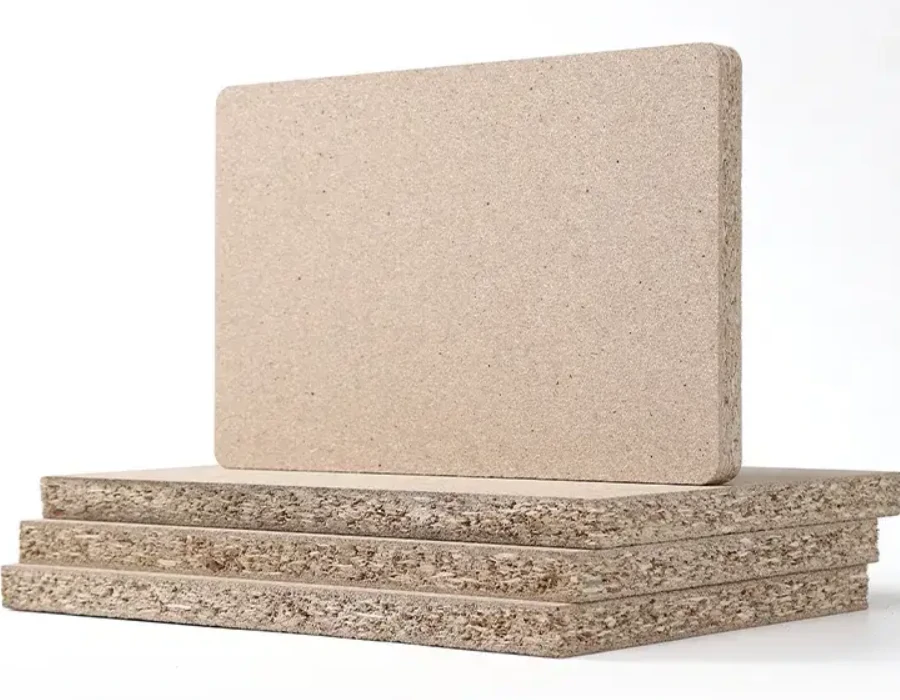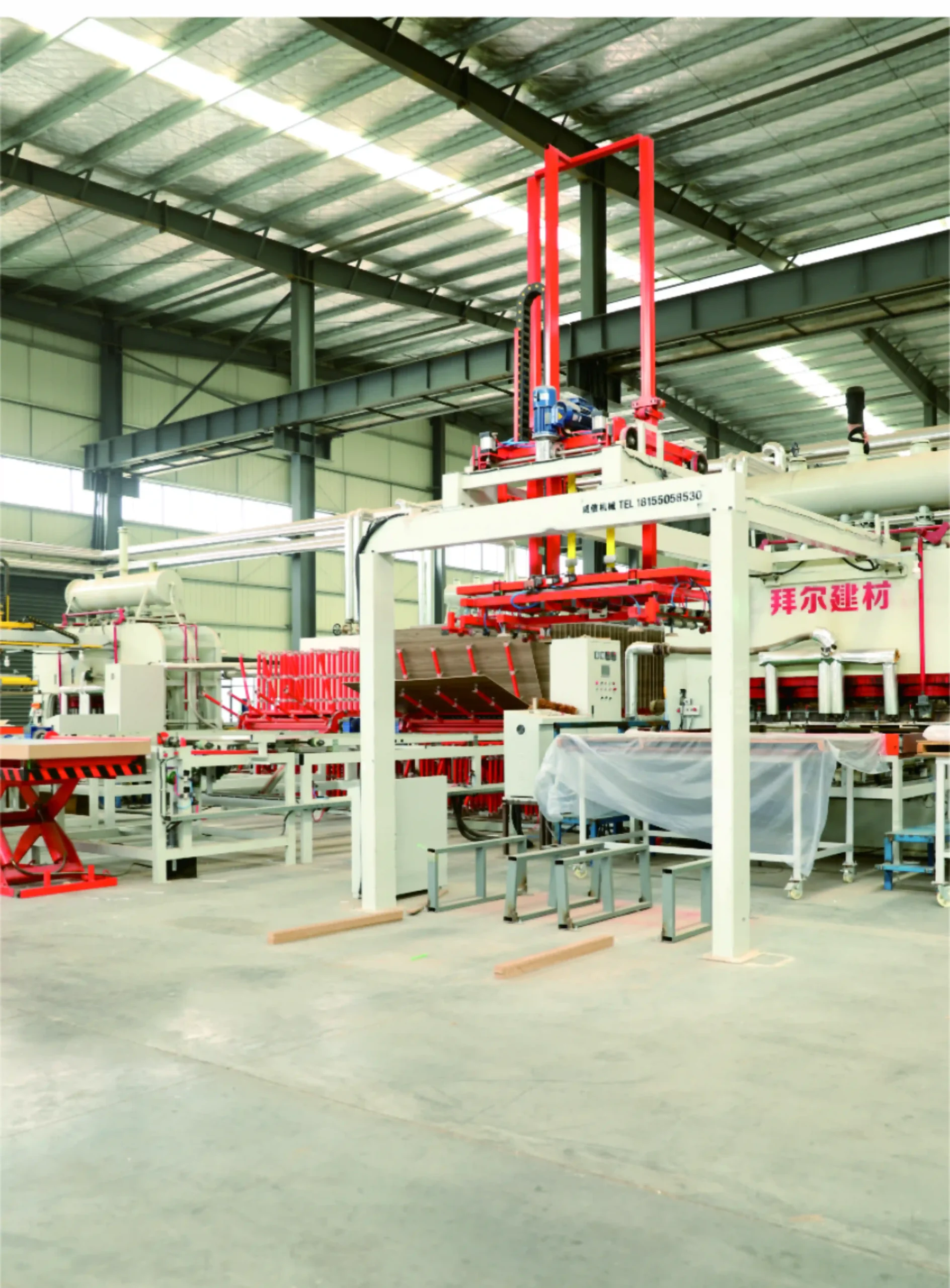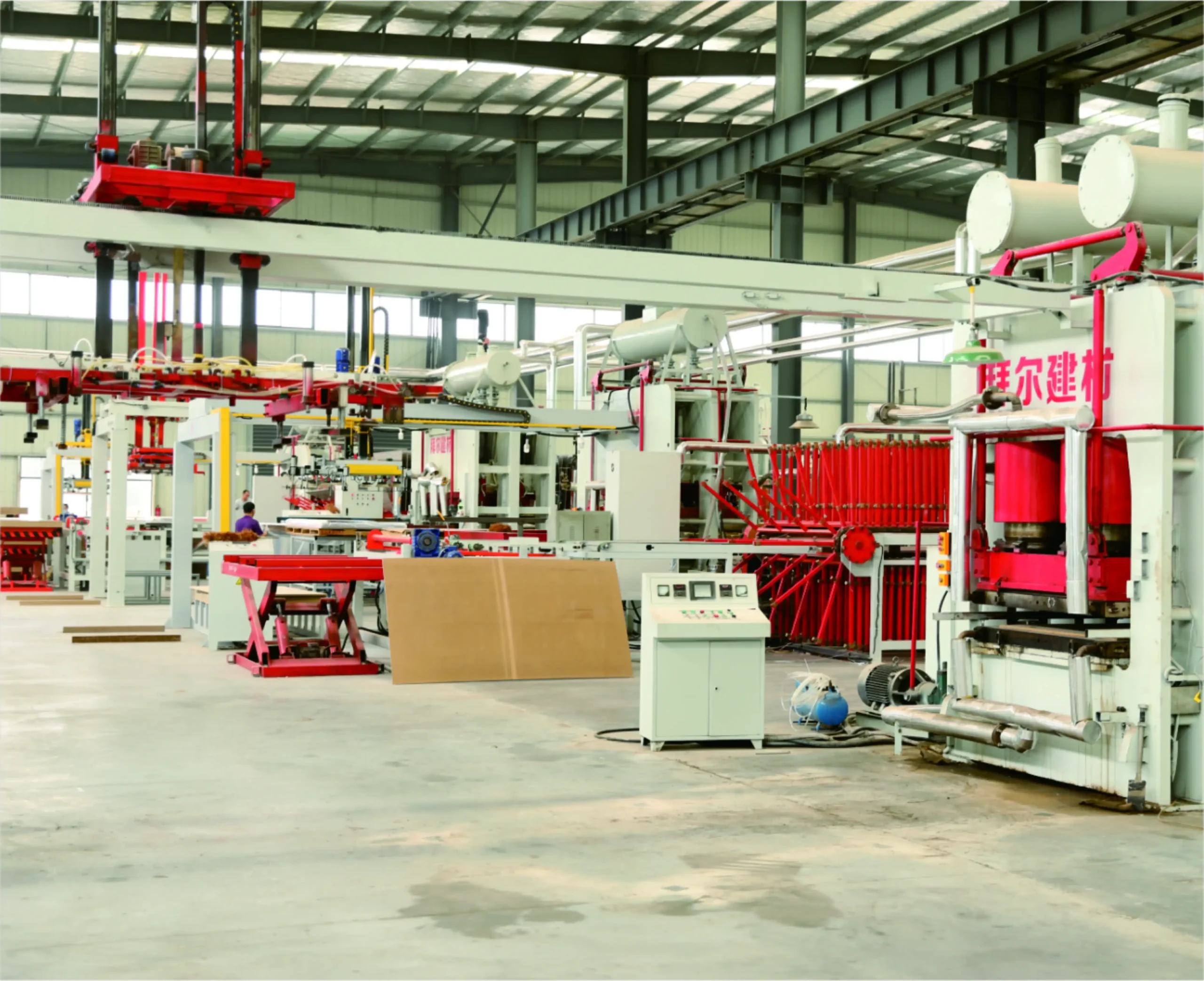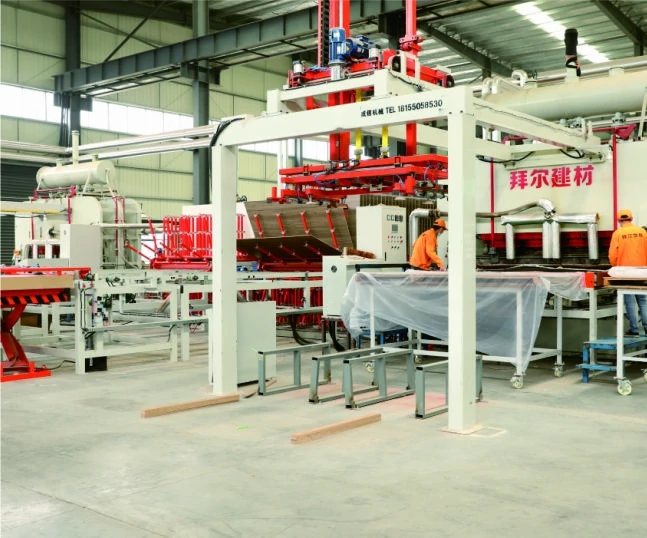
Particle board isn’t the boring, budget material it used to be. As we move into 2026, this engineered wood product is changing fast. Sustainability needs, new technology, and smart design uses are driving this shift.
Are you picking materials for a commercial project or fixing up your home? The particle board trends reshaping interiors matter to you. Check out moisture-resistant types that work in bathrooms now. Fire-retardant options meet strict commercial codes. Surface finishes look so real you’d think they’re solid hardwood.
The cost-performance balance has changed big time. Ignoring these developments means you’re losing money and missing out on innovation. Let’s cut through the industry hype. We’ll look at what’s changing, where these materials make sense, and which uses still need more work.
Content Framework for “2026 Particle Board Trends For Residential And Commercial Interiors”

The numbers show a clear path: the particle board market stands at USD 4,223M in 2025. By 2035, it reaches USD 6,116M. That’s a steady 4.2% CAGR. Residential use takes 47.90% of this revenue. Furniture, cabinets, and shelving drive demand in city apartments where space runs expensive.
Market Distribution That Matters
Bare board holds the biggest market share. Why? Contractors want this blank canvas. It’s cheap for cabinets and wall panels. You can add laminates or veneers based on your budget. Laminated board grows fastest though. Digital printing tech helps commercial spaces get custom looks without custom costs.
Flooring leads the growth. Particle board sits under laminates in city builds and DIY work. It’s tough enough and priced right.
Regional Performance Snapshot
| Region | What’s Driving Growth | The Reality |
|---|---|---|
| North America | Low-emission adhesives, modular furniture demand | Advanced manufacturing infrastructure |
| Asia-Pacific | Cities growing fast, affordable housing push | Construction boom in China and India |
Commercial sectors grow fastest. Particle board goes into office furniture, retail displays, and hotel projects. You get durability that fits tight budgets.
Sustainability and Green Materials Evolution

The sustainable materials market grows fast. It explodes from USD 374.67B in 2025 to USD 1,183.54B by 2035. That’s a 12.19% CAGR—triple the growth rate of traditional particle board. Particle board trends now ride this green wave or get left behind.
The European Push Changes Everything
Europe owns this shift. The region commands 37% of global sustainable materials share in 2024. Its market jumps from USD 138.89B (2025) to USD 399.74B by 2034. Strict EU rules on Formaldehyde emissions push manufacturers to adapt fast. Recycled content quotas do the same. You can’t sell particle board with high-VOC adhesives in Germany or France anymore. Period.
Green building materials tell the real story. The sector reaches USD 346.11B in 2025, hits USD 377.88B in 2026, then climbs to USD 914.18B by 2035. Residential uses grab 39.31% of this market right now. Commercial sectors grow faster though—9.67% CAGR. Office buildings and retail spaces chase LEED certification points.
What Works
Bio-based adhesives replace formaldehyde binders in modern particle board. Biodegradable plastics emit just 0.8 tons CO2—a 500% reduction versus petroleum-based options. Some manufacturers now add mycelium blends into their production lines. Recycled wood fiber content hits 80% in premium products.
Scrap aluminum saves 95% energy compared to mining bauxite ore. Smart factories use this thinking for particle board. Closed-loop manufacturing recycles edge trimmings and defective panels back into raw material. Life cycle assessment (LCA) tools track environmental impact from forest to installation.
Asia Pacific scales up bioplastics production in China, Japan, South Korea, and India. These new methods drop costs. They also meet packaging rules that ban single-use plastics across multiple markets.
Moisture-Resistant Particle Board for Wet Areas

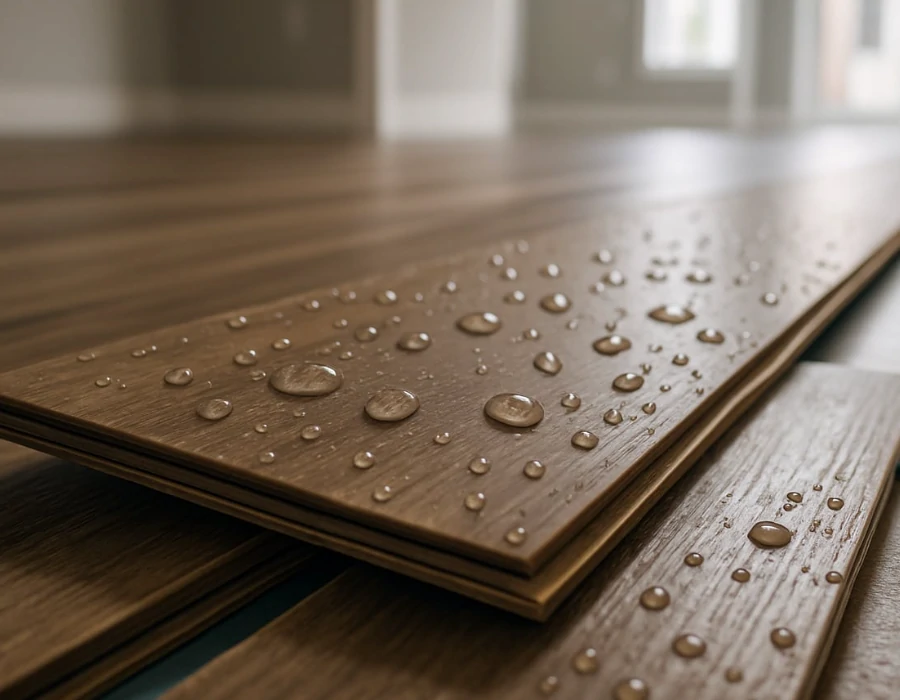
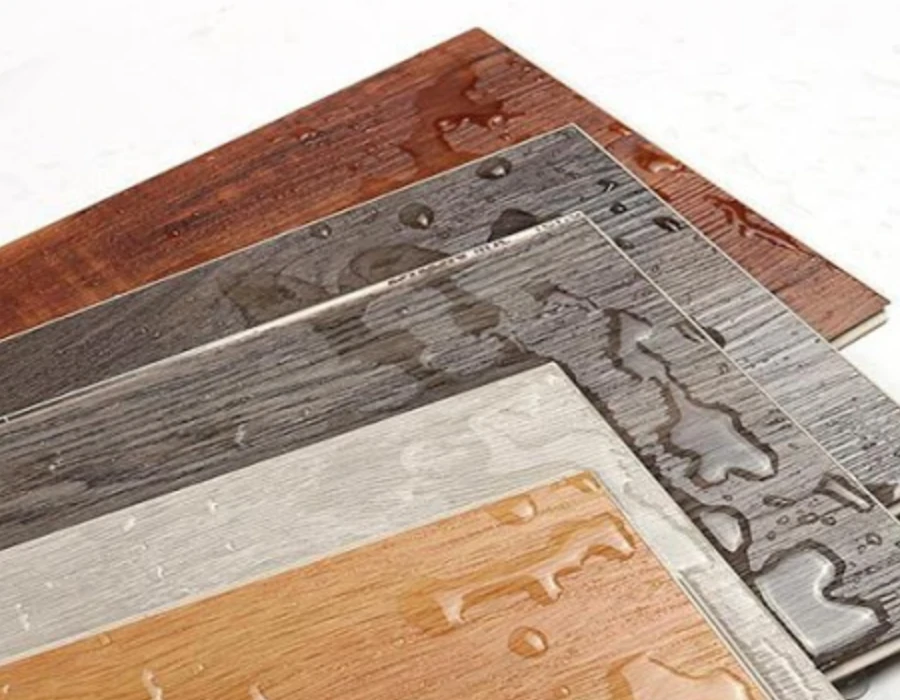
Standard particle board turns to mush in bathrooms. The fix? Engineered grades built to handle water exposure without falling apart.
Grading Systems That Mean Something
MR10 boards keep swelling under 5.5% after soaking—a baseline for occasional splashes. MR50 grades go further. They survive ASTM D1037’s six-cycle aging test. This test mimics years of humidity cycles in commercial kitchens and hospital labs.
The European P3 and P5 classifications get more specific. P3 boards absorb less than 8% water in 24 hours. An 18mm P3 panel supports 20kg per square meter across a 650mm span. Perfect for vanity cabinets and drawer boxes. P5 handles heavier loads. It has 40% higher bending strength (3500-4500 N/mm² versus P3’s 2500-2800 N/mm²). That extra strength extends shelf spans to 850mm. You pay 20-30% more. But P5 works for commercial countertops and lab fixtures where failure isn’t an option.
Edge Sealing Makes or Breaks Performance
Here’s what contractors miss: exposed particle board edges drink water like a sponge. Cut edges need two coats of 2-part epoxy resin or waterproof coating. Make it at least 0.5mm thick. Regular paint doesn’t cut it—water vapor gets through and ruins the core.
Use a carbide blade with 72+ teeth (96 works best) for clean cuts on 18mm boards. Sharp edges seal better.
Sierra FP MR10 uses recycled wood for kitchen cabinet boxes. Onsun’s P5 boards come in custom thicknesses from 8-64mm with 100m³ minimum orders. Arauco Ultra offers raw or heat-fused laminate surfaces. Both are made from 100% recycled content. Density matters too. Boards at 680-720 kg/m³ hold fasteners better in high-traffic bathroom partitions.
Fire-Retardant Solutions for Commercial Safety Compliance

Commercial buildings face tougher fire codes than before. Break the rules? You’ll pay $4.1 million in average fines and damages per incident. Spec’ing particle board for offices, hospitals, or data centers? Fire ratings are required now.
What Changed in 2026
NFPA 855 went beyond lithium-ion batteries. The new edition covers iron-air, lithium metal, nickel-hydrogen, and zinc-air types used in energy storage systems. Every setup needs a Hazard Mitigation Analysis (HMA). Active ventilation systems must meet NFPA 69 standards for explosion control. UL 954A brings large-scale fire testing rules. Manufacturers can’t cheat these tests.
States added more rules. Fire extinguisher types got redone. Inspection times got shorter. Staff training now requires double the paperwork. Keep your maintenance logs up to date. Inspectors look at them first.
Where Particle Board Fits the New Rules
Energy storage rooms and EV charging stations bring new fire risks to commercial spaces. Particle board wall panels and boxes in these areas need better fire ratings. Check your specs against the latest design and setup guides.
Pre-built construction grows 7.1% each year. Modular office systems and pre-fab walls use lots of particle board. Fire prevention measures must go in from the start. Fixing compliance later in modular parts is tough.
High-risk buildings need extra checks. Hospitals store delicate equipment. Airports run huge electrical systems. Data centers jam heat-making servers into small areas. These places need particle board products with proven fire performance. Third-party checks matter. Clear maintenance plans matter too. Your insurance company will want proof. Inspectors will double-check it.
Advanced Lamination and Surface Finishes
Lamination technology is changing fast. The thermal laminating machines market jumps from USD 1.5 billion in 2024 to USD 2.3 billion by 2030. High-pressure laminates grow from USD 15.33 billion to USD 21.50 billion by 2035. Particle board trends now drive interior design choices differently.
Speed and Precision That Matter
The DGM SMARTFLUTE X 1450 hits 160 meters per minute. It produces 12,000 sheets per hour. Laminate adhesion stays accurate within 1.5mm. You get production-line speed with custom-shop precision. Mid-range roll laminators now have heat sensors that adapt. They also control tension better. Material waste drops by 35%. Film changeover takes 50% less time. Your production line keeps running.
Semi-automated and fully-automated systems bridge the gap. They sit between basic machines and large industrial units. Programmable presets handle different lamination tasks. No manual adjustments needed. IoT-enabled diagnostics catch problems early. They stop issues before they damage your production run. Cloud-based logs help technicians fix problems from any location. A packaging converter in South Korea fixed a roller pressure issue remotely. The machine kept running.
Smart Surfaces Meet Real Needs
Touchscreen interfaces replace button panels. Sensors track roller pressure, heat spread, and film alignment. They do this in real time. This data creates maintenance schedules. You replace parts before they break. Not after they damage a batch.
Automated spray booths handle surface finishing. Robotic polishing arms do the same. AI-powered monitoring checks quality. Consistency gets better. Labor costs go down. Hybrid systems do lamination, foiling, and spot varnishing in one pass. Decorative high-pressure laminates grow at 4.7% CAGR. They’ll reach USD 9,218.60 million by 2032.
Green formulations spread fast. Film makers create biodegradable options. These meet packaging rules. Durability stays strong. Formaldehyde-free resins replace old binders. Europe’s strict environmental rules drive these changes. Asia-Pacific makes them bigger. Manufacturing hubs in China, South Korea, and India lead the scale-up.
Smart Manufacturing and Precision Engineering
Particle board factories are changing how they work. The precision machining market grows from USD 123.54 billion in 2025 to USD 228.75 billion by 2033. That’s an 8.1% CAGR. This shows a big shift in manufacturing. CNC operations take 78.9% of the market in 2025. They deliver things manual work can’t. You get exact cuts. You get non-stop production. You get complex work done at scale.
Adaptive Machines That Learn
2026 brings adaptive correction systems. These connect design files to actual cutting. Your CNC router feels vibration in real-time. It adjusts feed rates. It fixes tool deflection while the blade spins. Self-calibrating tool presetters remove setup errors. These errors often happen during shift changes. Robot-tended CNC cells move workpieces. No human hands needed.
Digital twins combine design, engineering, and machining into one updated model. You test virtual cuts first. Physical blades touch particle board later. Clash detection finds mistakes in software. Not on the shop floor. Real machining data goes back into simulations. This makes predictions better with each production run. Mixed-reality headsets help technicians fix equipment from far away.
AI watches machine performance every second. It spots bearing wear before major failure happens. Predictive maintenance plans part swaps during planned stops. Not during emergency shutdowns. Tool path tweaks, wear prediction, and scrap reduction boost profits. Manufacturers who use these systems first see bigger gains.
Laser machining grows at 9.9% CAGR. That’s the fastest rate in precision engineering. Cutting, engraving, and micro-machining create little waste. Electronics makers need this precision. Medical device makers need it too. Aerospace suppliers cut turbine blade slots with lasers. Automotive plants machine brake parts. Millimeter errors in these parts can cause deaths.
Modular Furniture and Ready-to-Assemble Applications
Flat-pack furniture isn’t just an IKEA thing anymore. The modular furniture market grows from USD 88.4 billion in 2025 to USD 134.7 billion by 2035. That’s a 4.3% CAGR adding USD 46.3 billion in absolute gains. Particle board makes this possible. The material ships flat. You can cut it with simple tools. Home assembly needs no special equipment.
Living Spaces Drive Volume
Living room furniture grabs 27.6% of the market in 2025. Modular sofas lead sales. Entertainment units and shelving systems follow close behind. Storage units claim the largest share overall. Urban apartments squeeze every square meter. People want furniture that adapts. They don’t want to move just to fit their stuff.
Wood dominates material choices. It lasts long and looks good. Plastic grows faster though. It weighs less, resists moisture, and keeps termites out. You can cut it with basic saws. Budget DIY projects in India and the UK boost plastic’s growth. Online retail lets you order custom setups fast. Homes use modular furniture more than offices. But flexible workspaces narrow that gap.
China’s 5.8% CAGR beats the US at 3.7%. India hits 5.4% driven by rising incomes and space-saving needs. The 2030-2035 period adds USD 25.5 billion—55% of total decade growth. Annual gains jump from USD 3.4 billion at the start to USD 5.3 billion by 2035. US modular office furniture shipments alone reach 17.5 million units.
Residential Interior Dominant Applications

Homeowners want particle board to solve real problems, not just fill space. Built-in cabinets show this shift best. Small homes need “cabinet walls” that combine storage zones, TV mounts, fireplace surrounds, and seating benches in one piece. Particle board makes this work. You can add wood finishes, paint surfaces, or mix in stone and metal accents without breaking the budget. Solid wood can’t give you this flexibility at the same price.
Storage Solutions That Work
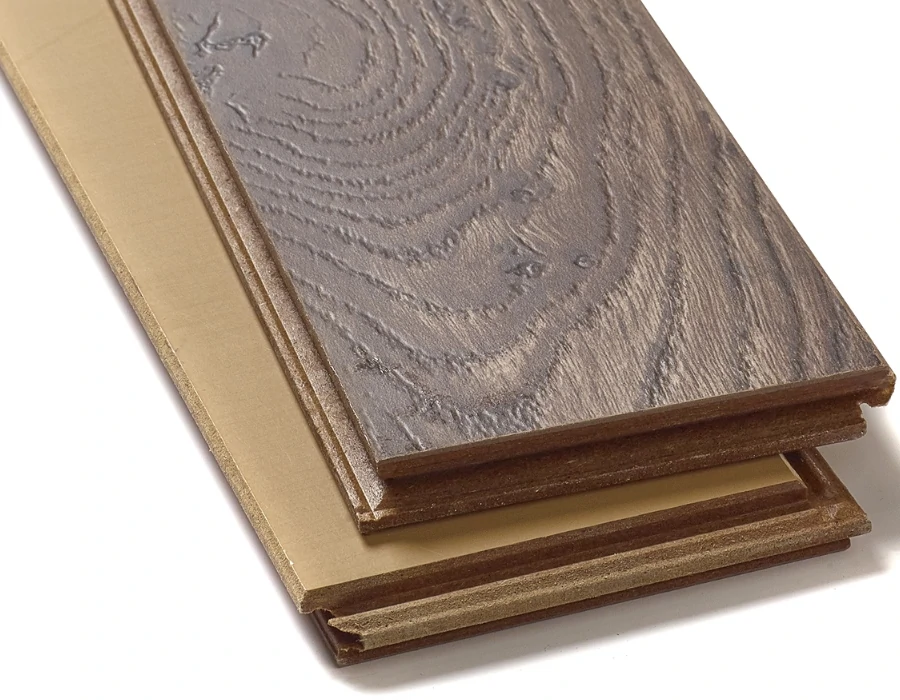
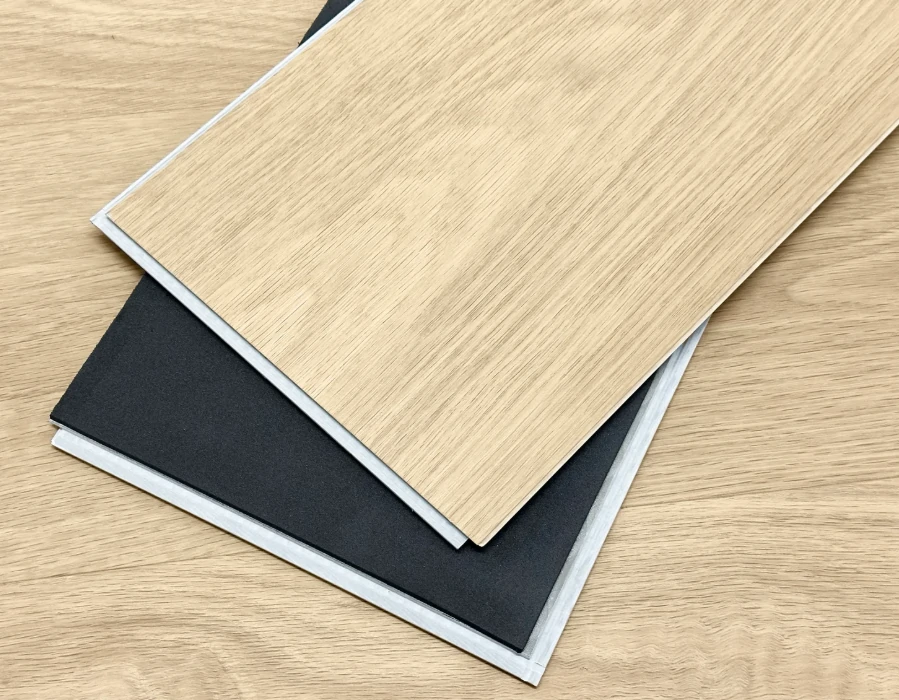
Flat-panel cabinetry ranks second to Shaker style in 2026 searches. Why? Smooth doors with clean edges that particle board delivers every time. Edge-banded panels hide all seams. High-pressure laminates copy hardwood grain so well that most people can’t spot the difference from three feet away.
Zoned built-ins mix open and closed storage. This cuts down on extra furniture. Contractors work with tolerances under 0.5mm. They build seamless finishes using wood, paint, stone accents, metal frames, and glass inserts—all on particle board cores. The base stays hidden. The look stays high-end.
Design Trends Driving Demand
Checkerboard floors jumped 38% in search volume year-over-year. Bathroom checkerboard patterns exploded 103%. Sage, emerald, oxblood, and burgundy replace traditional black-and-white. Particle board subflooring works for these patterns. Just seal it and grade it for moisture resistance.
Wall-mounted bathroom faucets became the top renovation upgrade. They clear counter space and pair with large vessel sinks. Moisture-resistant particle board vanity cabinets hold the weight. Plus, they cost 40% less than solid wood.
Green leads color trends. Sage, olive, forest, and deep green cabinets anchor spaces. Particle board takes paint better than MDF—you need fewer coats for full coverage. It pairs well with handmade tile, marble backsplashes, and warm wood accents. Light woods like European oak, bamboo, ash, and birch appear in eco-sourced particle board products. Core material doesn’t need to match surface veneers. This stretches rare wood species further.
Color drenching mentions rose 149% year-over-year. One color flows across walls, trims, ceilings, floors, and furniture. Particle board takes uniform paint without grain bleeding through. This matters when you want visual consistency over material authenticity.
Reading nooks appeared in 48% more property listings. Oversized armchairs fill bay windows. Dedicated rooms show floor-to-ceiling shelving. Particle board shelves span up to 850mm with the right support. Cost per linear foot runs 60% less than hardwood. They handle typical book loads (20-25kg per meter) without sagging.
Wellness rooms are the newest home addition. Breathing rooms use air-purifying plants in custom particle board planters. Meditation nooks need soft acoustics. Particle board panels with fabric wrapping absorb sound better than drywall. Warmth therapy spaces hold sauna pods and infrared panels in particle board-framed boxes. Spa-inspired bathrooms drove 25% more searches. Steam showers and built-in saunas need moisture-resistant grades. The material works for these spaces if you match specs to the environment.
Commercial High-Traffic Interior Solutions
Commercial spaces wear out materials much faster than homes. The commercial interior design segment holds 38-55% of the global market. That’s $137.93B in 2024, growing to $175.74B by 2030. Particle board trends now focus on engineered grades. These boards handle what offices, hotels, and retail stores throw at them each day.
Where Volume Matters Most
New construction drives 46-76% of commercial interior spending. These projects use particle board from the start. Architects pick moisture-resistant grades for hotel bathroom vanities. They select fire-rated panels for hospital corridor walls. Get the specs right during design. This beats fixing problems later.
Remodeling grows faster though—5.3% CAGR from 2024-2030. Project cycles keep getting shorter. Contractors want prefab solutions. Particle board panels come pre-finished. Installation takes days, not weeks. Your store stays open. Your office keeps working.
Applications Built for Punishment
Furniture takes 35% of commercial interior budgets. Office desks, conference tables, and hotel nightstands need cores that won’t sag. Density matters here. Panels at 720+ kg/m³ hold fasteners through repeated moves. They handle reconfigurations too. Workspaces now favor flexible furniture. Think modular pieces that reconfigure without replacing everything.
Hospitality claims 20% of market share. Hotels see hundreds of guests each month. Restaurant tables get wiped down twenty times per day. Particle board cores need high-pressure laminates. These must handle commercial cleaning chemicals. Edge banding has to seal tight. Water getting into joints destroys particle board faster than surface wear.
Retail displays and shop fitouts use particle board in their own way. Visual merchandising changes with each season. Display units need clean lines. Fast assembly matters. Budget beats longevity here. A display lasting two years at 40% the cost of hardwood just makes sense.
North America holds 33.79% of global commercial interior spending. The US makes up 83.21% of that—$27.2B in 2025. This market grew 4.2% each year over five years. Productivity and wellness drive it now. Standing desks, acoustic panels, and air-quality monitoring all need particle board substrates. These must meet commercial building codes. No premium pricing needed.
Regional Market Volume and Growth Drivers
Asia-Pacific consumed 214 million cubic meters of particle board in 2024. The market value hit $94.3 billion—down 7.4% from 2023. This dip doesn’t signal a collapse. It shows a mature market adjusting after years of fast growth. By 2035, volume recovers to 234 million cubic meters. Value jumps to $114.2 billion. That’s a modest 0.8% volume CAGR but a stronger 1.8% value CAGR. Pricing power returns as quality upgrades take hold.
China’s Dominance Reshapes Regional Dynamics
China produces 280+ million cubic meters annually—over 60% of global output. The country accounts for 150 million cubic meters of regional consumption. That’s 70% of Asia-Pacific demand. China also holds 73% of regional production capacity. This dual role as maker and buyer creates pricing swings. Export prices dropped to $396 per cubic meter in 2024, down 8.4% year-over-year. Too much supply floods markets. Smaller producers can’t keep up.
China’s mature market shows -1.9% annual value decline from 2013-2024. Volume stays flat. Prices slide. New growth comes from better products. Think moisture-resistant grades, fire-rated panels, and low-emission types. The country’s $62.2 billion market value (66% of regional total) still towers over competitors.
India and Thailand tell a different story. India consumes 20 million cubic meters with +6.4% annual growth. Thailand uses 6.6 million cubic meters at the same +6.4% rate. These rising markets push regional growth. Urban housing projects and furniture making feed demand. India’s $9.6 billion market value trails China but grows faster. Thailand’s +26.4% import volume growth makes it the region’s fastest-growing importer.
Europe Pursues Quality Over Volume
European producers made 58 million cubic meters in 2023. Germany and Poland lead output. The region’s $43.39 billion market (2022) grows at +8.6% CAGR through 2030. Construction consumed 170+ million cubic meters in 2023—37% of total panel use across the globe. Ceiling, cladding, and flooring uses push volume in both homes and commercial buildings.
Particleboard grows at +3.7% CAGR—the fastest rate among engineered panels. Germany’s furniture market drives this. Over 850 manufacturing lines upgraded from 2022-2024 to handle modular furniture production. CNC customization creates design options that solid wood can’t match at good prices.
Lightweight panels under 500 kg/m³ claimed 17% of European sales in 2023. Easy transport and installation help in retrofits and tall building projects. Low-emission glues now make up 25% of new production. Formaldehyde-free bonding takes more share as rules get tighter. These quality boosts justify higher pricing even as Asian imports fill lower tiers.
Global Trade Patterns Shift Inward
$13 trillion in annual global construction spending props up demand. Residential infrastructure and public housing projects create steady volume. But trade flows group by region. China leads both exports and imports despite huge domestic production. Intra-Asian trade handles local demand spikes without long shipping costs.
Japan shows the opposite path. The country posts -4.7% annual value decline—a mature market shrinking as population ages. Furniture making consumed 135 million cubic meters across the globe in 2023. Plywood and MDF take 62% of that volume (over 280 million cubic meters combined). Particle board captures the rest with better growth potential.
Recycled wood fiber panels reached 18 million cubic meters in 2023. Post-consumer content cuts deforestation pressure. Hardwood scarcity speeds up engineered panel use. Cost edge seals the deal. Particle board’s better strength-to-weight ratio and even density beat traditional wood and plywood in standard uses.
Cost-Effectiveness vs. Other Materials
Particle board looks cheap at first. But ignore lifecycle costs and that pricing advantage vanishes. The sticker price is just one piece. Transport, installation labor, and long-term upkeep show if you saved money or pushed costs down the road.
Real Numbers That Change Decisions
Standard particle board costs 40-60% less than plywood per square meter at checkout. An 18mm sheet runs $12-18 versus plywood’s $28-42. Solid hardwood costs even more—you’ll pay $65-95 for the same coverage.
But here’s the catch: particle board weighs more. A cubic meter hits 650-750 kg compared to plywood’s 550-650 kg. Shipping costs climb 15-20% on high-volume orders. Plus, disposal fees add up later. Most recycling programs accept plywood scraps but reject particle board.
Installation labor changes the math. Particle board cuts clean with basic carbide blades. No tear-out on cross-cuts. No splintering that wastes material. A two-person crew installs 30% more cabinetry per day versus hardwood. Hardwood needs pre-drilling, careful sanding, and edge treatments. Time savings add up fast on commercial projects where labor runs $45-75 per hour.
Maintenance costs vary by use. Particle board kitchen cabinets last 8-12 years in homes. Hinge points fail or moisture damage spreads after that. Plywood cabinets last 15-20 years. Solid wood hits 25+ years with proper care.
These numbers assume the same exposure levels. A moisture-resistant P5 particle board vanity in a ventilated bathroom lasts as long as plywood. You pay 65% of the material cost. Why pay for plywood’s longevity in a 10-year commercial lease? You gain nothing.
Performance Trade-offs You Can’t Ignore
Particle board holds screws through 6-8 reinstalls before holes strip out. Plywood handles 12-15 cycles. This matters for adjustable shelving and hardware that gets moved.
Office furniture gets reconfigured constantly. Spec plywood or solid wood for partition frames that relocate every few months. Use particle board for the decorative panels that stay fixed.
Bending strength splits applications into clear categories. An 18mm P2 particle board shelf spans 450mm under 15kg load. Push that to 650mm and you see visible sag within months. The same thickness in birch plywood handles 750mm spans at 25kg without bending. Solid oak goes to 900mm but costs triple the plywood price.
Match material grade to span and load. Oversizing wastes money. Undersizing creates failures.
Looks present the trickiest trade-off. High-pressure laminates on particle board copy wood grain down to tiny details. Touch sensors and viewing angles under 30cm show the difference. Most homeowners can’t tell from normal use distance.
Commercial spaces prioritize cleanability over authenticity. A laminated particle board conference table costs $450 versus solid wood’s $1,800. Both wipe clean. The wood table looks better but doesn’t work better for that job.
Water exposure kills particle board. Even P5 grades absorb 8-12% moisture in high-humidity areas over months. Swelling creates permanent size changes. Plywood absorbs 4-6% and returns to original size after drying.
Bathrooms, laundries, and coastal climates need plywood or solid wood. Particle board fails no matter how much you save upfront.
Strategic Material Selection
Run ROI calculations per project. Particle board saves $8-12 per square meter upfront. Installation speed cuts labor 25-30%. Total project savings hit 35-40% on material and labor combined.
Does the application last your ownership period without replacement? You win. Do you sell before particle board’s 8-12 year lifespan expires? The next owner gets your savings. Do you need to replace cabinets or furniture in year 6 due to wear? Plywood’s longer life costs less overall.
Commercial projects with 5-7 year depreciation schedules favor particle board. Home renovations targeting 15+ year use periods lean toward plywood. High-end custom work demands solid wood no matter the cost. Clients pay for material prestige, not performance.
Match your material choice to realistic use duration. Consider environmental exposure. Check if looks matter to your end user or just your preferences.
Conclusion
The particle board industry keeps moving forward. It’s racing toward 2026 with innovations that fix real problems. Moisture-resistant cores now work for bathrooms. Fire-retardant panels meet strict commercial codes. These aren’t small updates. They change the game for designers and builders who want performance at a fair price.
Here’s what matters most: Sustainability credentials are a must-have now. Advanced surface finishes look as good as solid wood. Modular applications change how we use space. You might spec materials for a boutique hotel lobby. Or plan a kitchen remodel. Knowing these particle board trends gives you an edge in residential and commercial projects.
Your next move? Check your current material specs. Ask suppliers about eco-certifications. Test samples of new lamination technologies. Compare costs against traditional options. The materials trending in 2026 are available now. Adopters are seeing benefits in project timelines. Budgets improve. Client satisfaction goes up. Don’t wait for these innovations to become standard. Lead with them today.